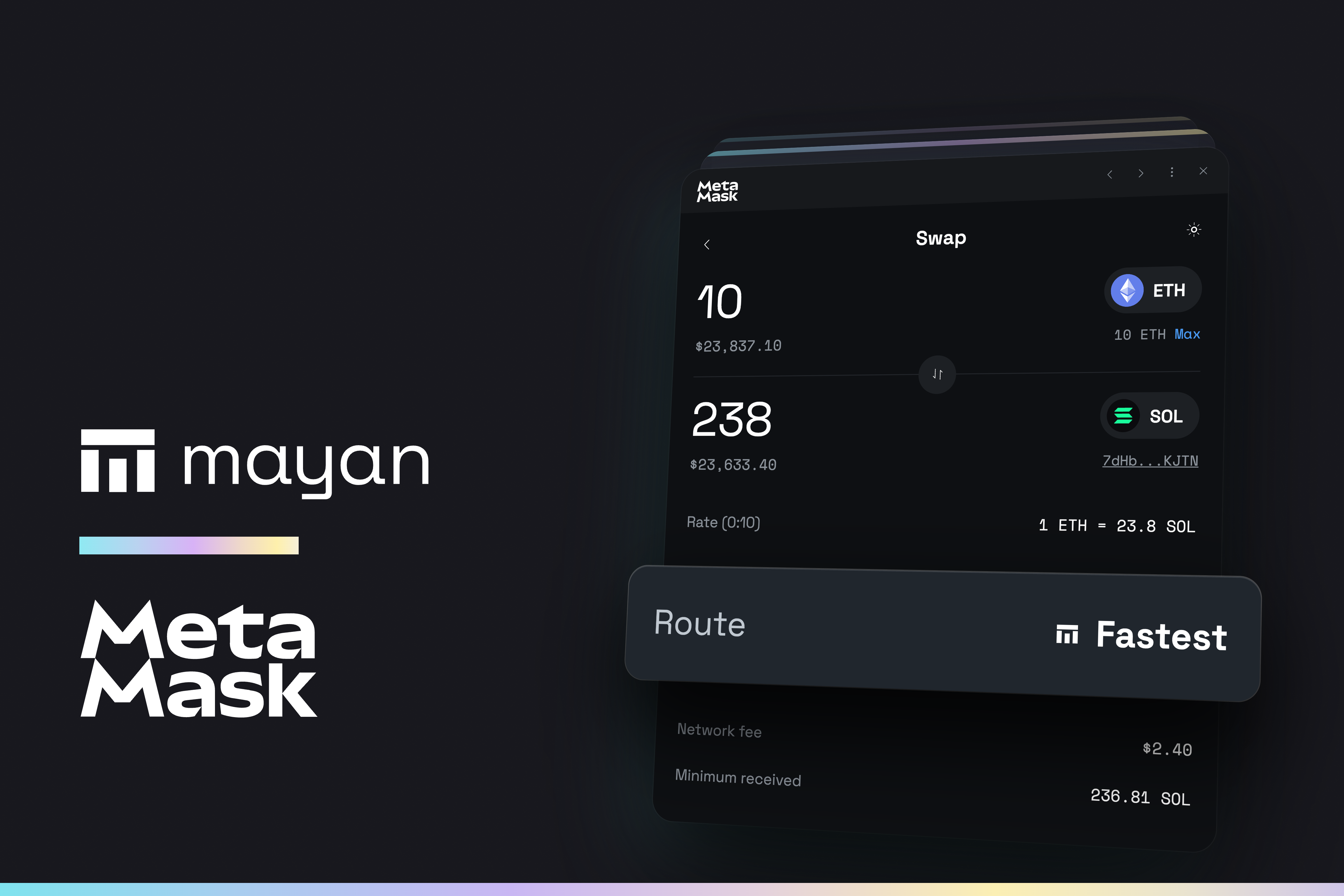
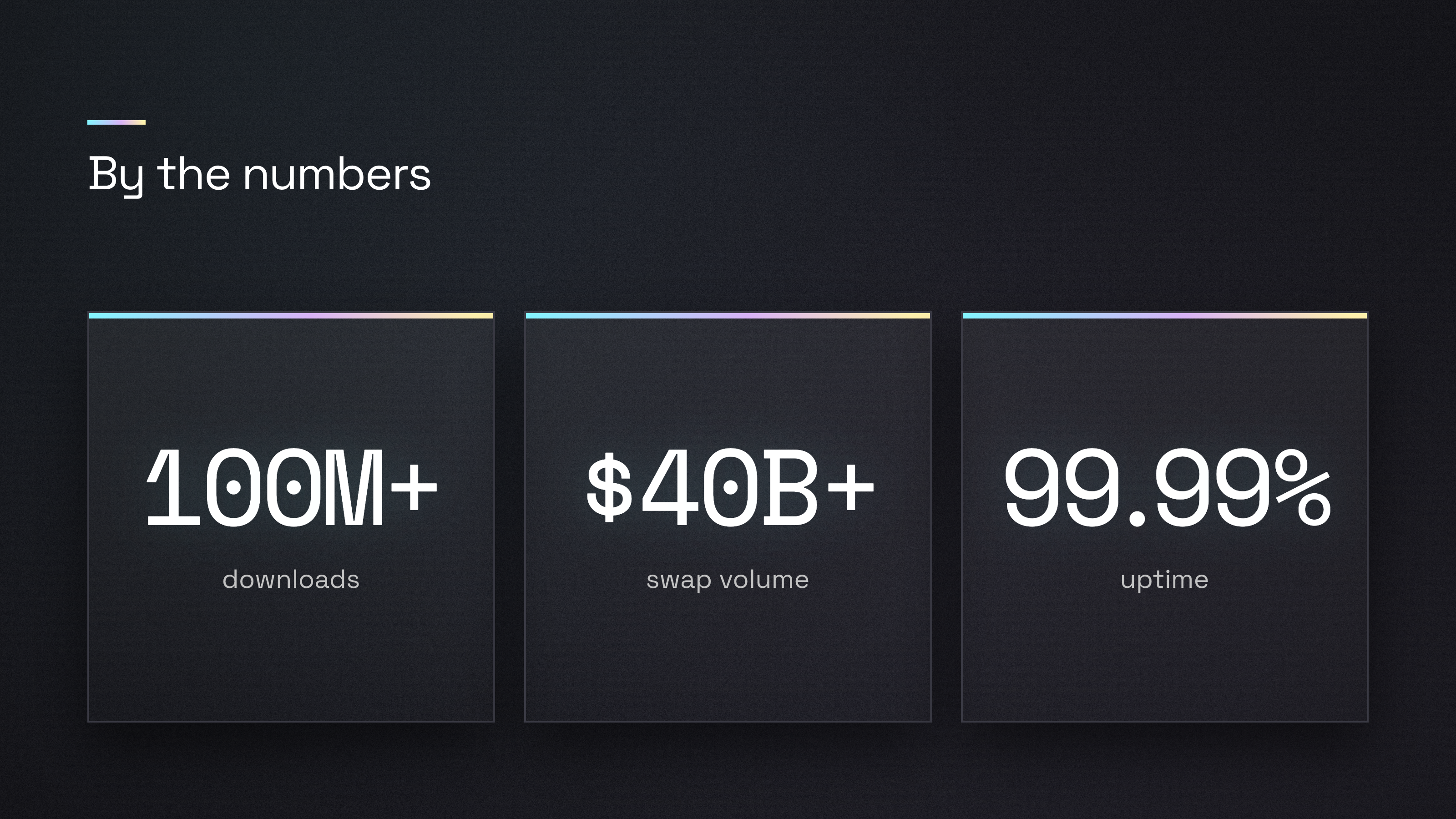
MetaMask has over 30 million active users and more than $40B in swap volume. They already offered cross-chain swaps through aggregators. But they wanted more control over the experience: faster quotes, higher reliability, a tighter integration. So they brought Mayan in as a direct provider. The result: cross-chain swaps that feel like same-chain swaps. One-click confirmation, seconds to settle, without ever leaving the wallet.
What It Looks Like
A MetaMask user picks a token on one chain, picks a token on another, confirms, and it's done. Assets arrive in their wallet in seconds. No bridging step, no second transaction, no switching apps.
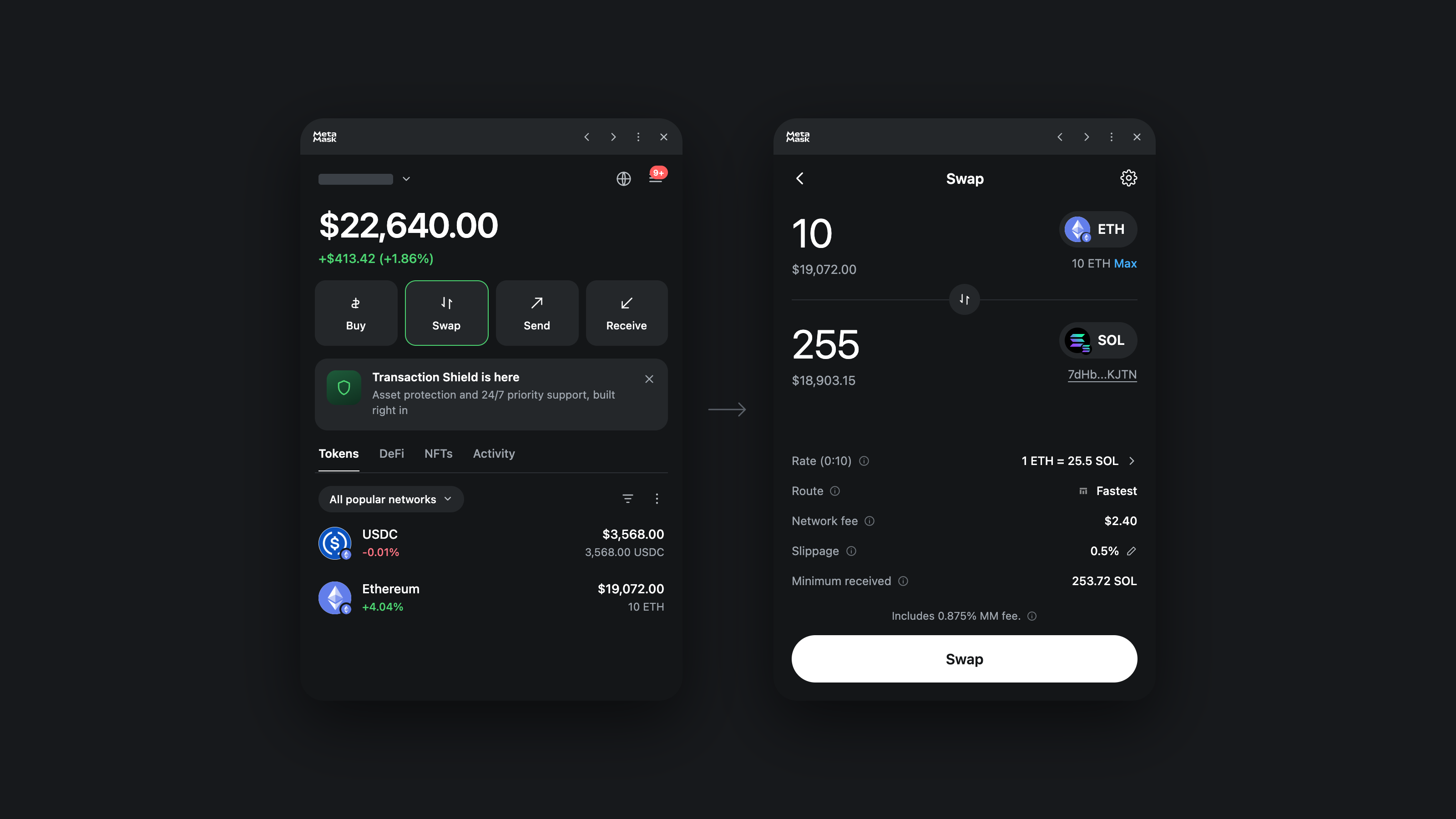
MetaMask shows users quotes from multiple providers and lets them choose. Mayan's solver network competes for every order, each solver trying to deliver the user the highest token amount received. Same-chain and cross-chain swaps run through the same integration: one API, one set of contracts, one relationship for the wallet team.
Mayan is any-token-in to any-token-out. Whatever your users are trading, stablecoins, majors like ETH, SOL, MON, and AVAX, or memecoins, it's covered. Stablecoin swaps in particular deliver competitive rates on amounts up to $10M, which matters for wallets with institutional or high-volume users.
When Mayan 2.0 launched in early 2026, execution became 5x faster and 2x more gas-efficient, settling swaps in seconds and for cents.
Why Go Direct
Aggregators do valuable work. They give wallet teams access to multiple bridge and swapping providers through a single integration, which is a great way to get cross-chain live quickly.
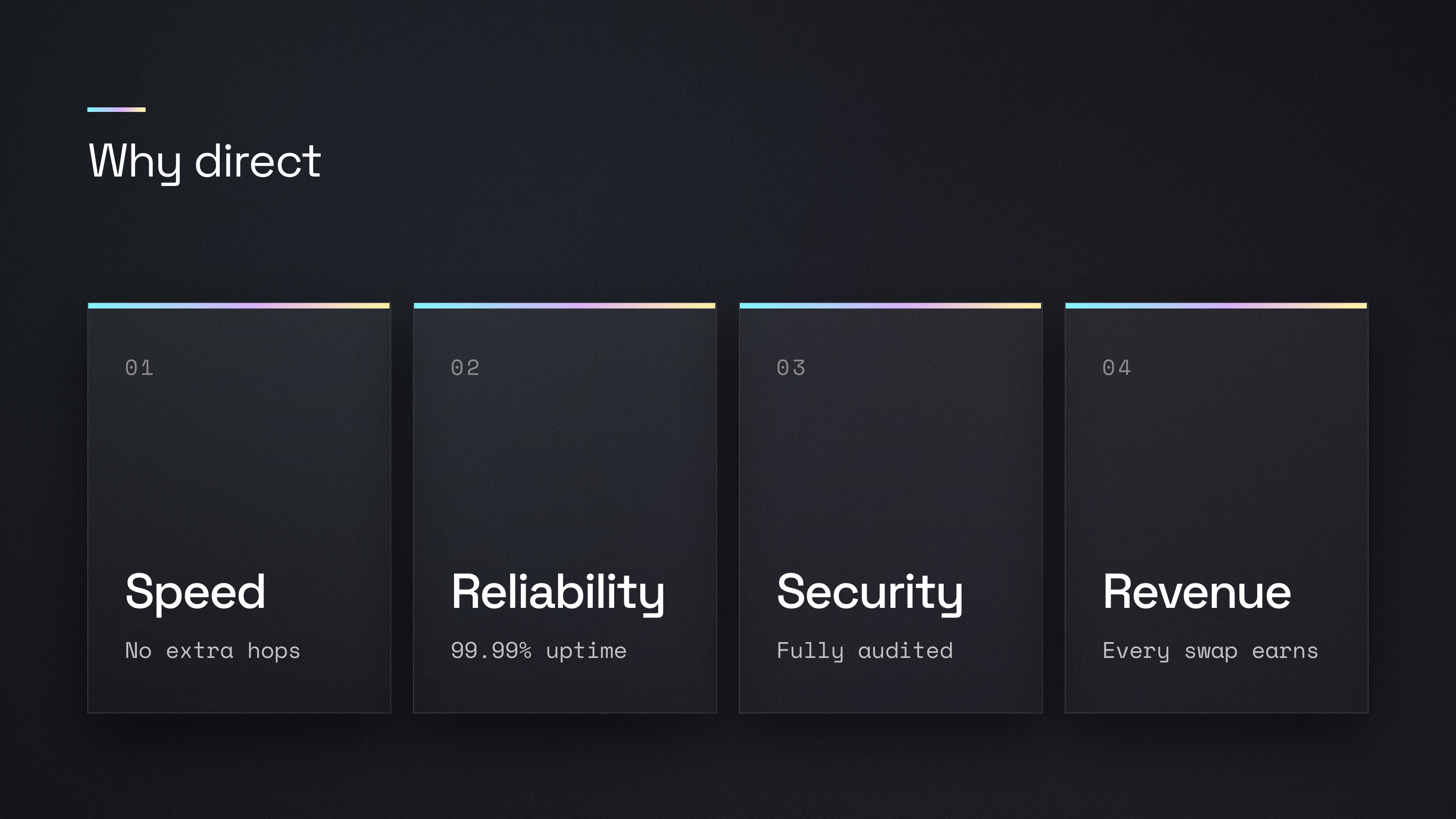
Going direct is a different trade-off. You manage the provider relationship yourself, and in return you get more control over four things that matter at scale.
Speed: a direct integration is the shortest path between the wallet and the swap. No extra hops, no added delay on quotes. One wallet team we work with measured 200ms of overhead from a single intermediary on their quote response times. At high volume, across every quote request, that compounds into a noticeably slower experience for users.
Reliability: Mayan maintains 99.99% uptime and greater than 99% execution reliability. With a direct integration, the wallet team has one dependency and full visibility into performance, with no guessing about where a failed swap broke down.
Security: aggregators add their own smart contracts on top of the provider's, one more set of contracts that user funds pass through. Going direct removes that extra step. Mayan's contracts are audited by OtterSec, and the protocol is open-source.
Revenue: fewer intermediaries means fewer fees between the user and the wallet. Every swap generates revenue for the wallet, settled automatically.
For Wallet Teams
Any wallet team can do what MetaMask did.
Mayan currently supports Solana, Ethereum, Base, Arbitrum, Optimism, BNB Smart Chain, Sui, Monad, HyperEVM, Hyperliquid, Avalanche, and Polygon — with more chains shipping regularly.
The integration uses the Mayan SDK (@mayanfinance/swap-sdk). A few core functions — fetchQuote, swapFromEvm, swapFromSolana — handle the full swap flow. The fastest teams have gone from first API call to production in less than a day.
Every swap generates a fee for the wallet, settled on-chain automatically. No invoicing, no reconciliation.
Mayan provides a testnet environment, dedicated integration support, and a sandbox to try before committing.
Start building at docs.mayan.finance. Want to talk through your integration first? Book a call with our team here.