If we zoom out on 2025, the defining pattern wasn’t which chains people used the most, but how frequently they moved between them.
This year, Mayan’s bridged volume tripled, adding $11B+ and pushing our total to $16B.
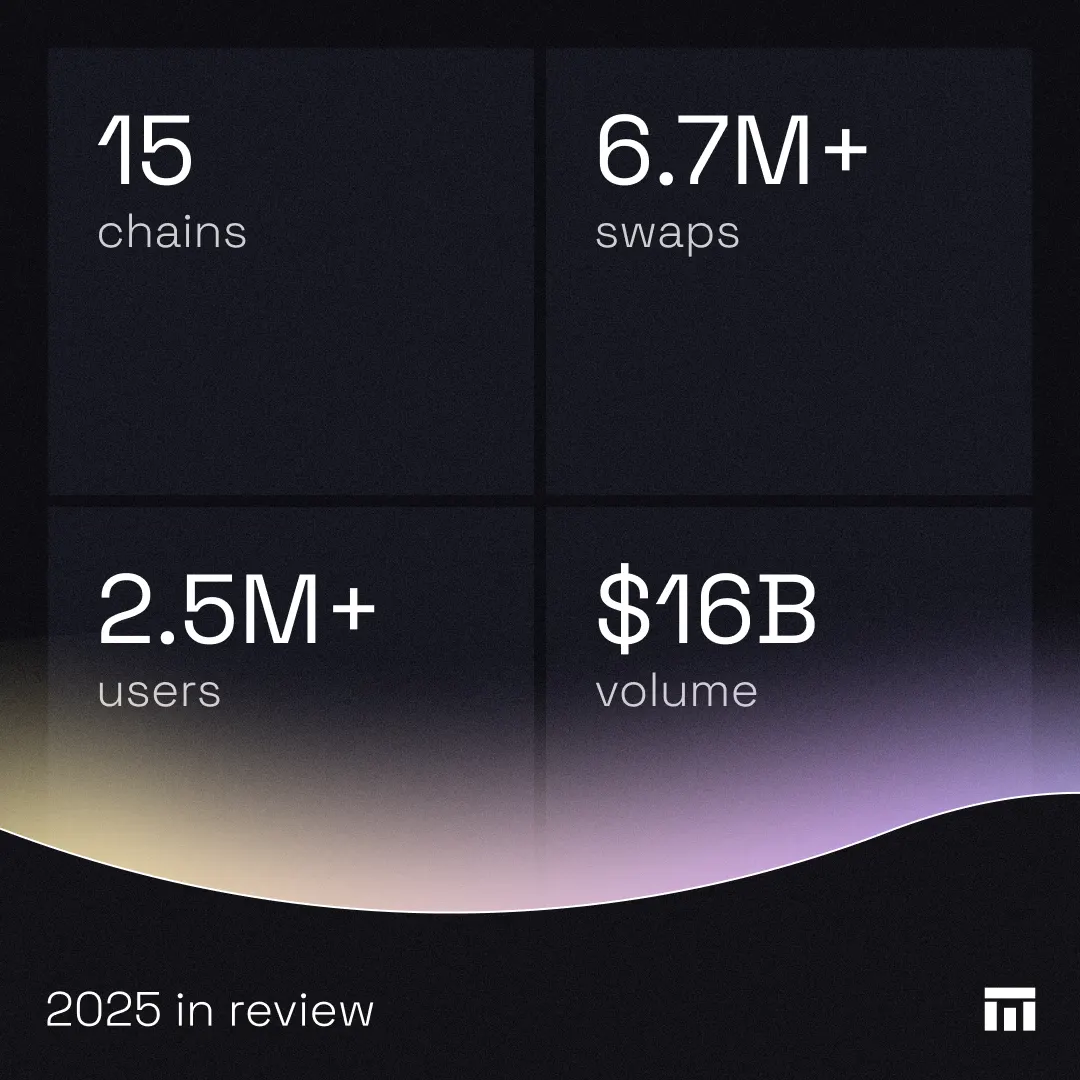
That growth wasn’t driven by a single chain or moment. It reflected something more structural: users are moving between chains more often, faster, and with clearer intent.
This points to a market that no longer behaves like a pure winner-takes-all system. Instead, the real story is a more balanced landscape: value isn’t piling up on just one chain, but flowing freely between many.
Cross-chain movement isn’t a special case anymore. It’s a normal part of being onchain, where moving tokens between chains instantly and at low cost is the default expectation rather than the exception.
Users didn’t migrate. They circulated.
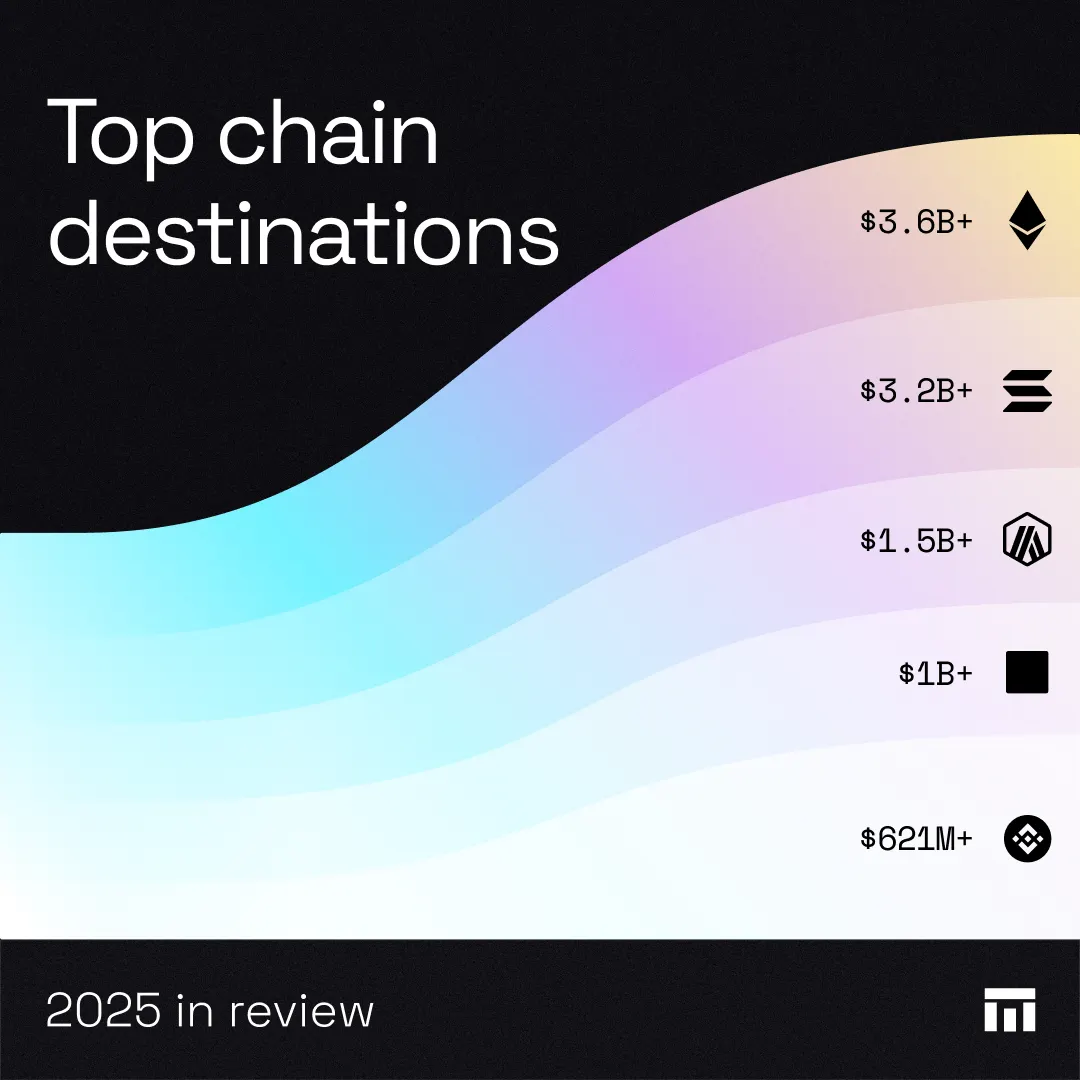
Ethereum received the largest share of inbound volume on Mayan in 2025 — about $3.6B, roughly a third of all destination flow. Solana followed closely at ~$3.3B, with Arbitrum, Base, and BSC together accounting for another ~$3B.
The most active route on Mayan was Ethereum ↔ Solana, and importantly, it was bidirectional.
This highlights how chains with the best infrastructure and connectivity enable high-value circulation of capital. In a world of RWAs, stablecoins, and other high-PMF assets with massive growth potential, seamless highways are essential for value to flow freely.
Smart money is chain-agnostic — it chases yield and opportunity without expecting borders.
Movement runs on stablecoins
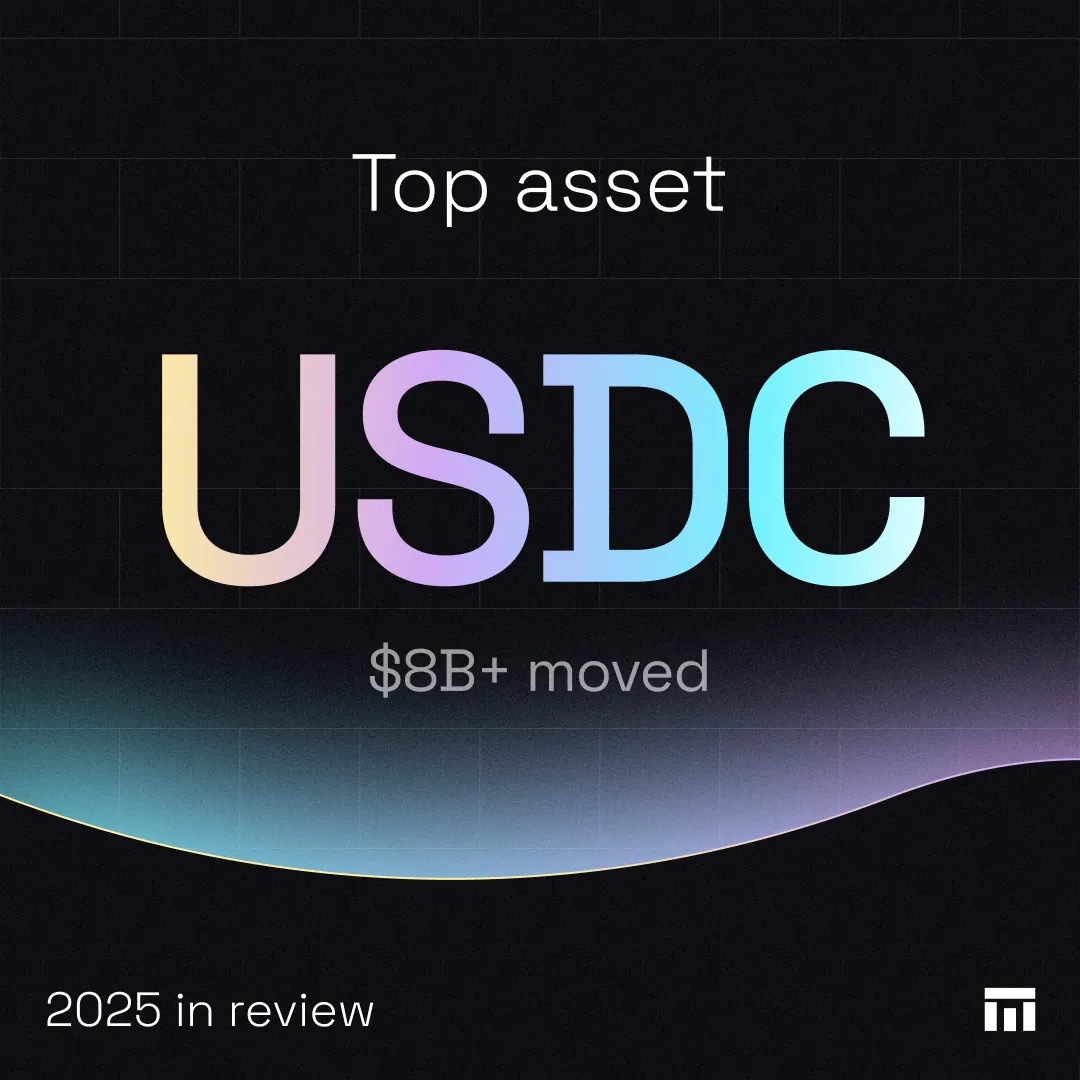
At the asset level, one pattern dominated 2025: stablecoins were the movement layer.
On Mayan, the most common asset pair by far was USDC → USDC, with over $8B+ transferred across chains.
Connected chains win
This year, Mayan added routes to Sui, HyperEVM, Monad, and Fogo, and liquidity began flowing through them soon after launch.
The pattern is clear: chains that launch already connected attract applications and capital faster because builders can ship to them immediately and users can act the moment liquidity arrives.
We’re seeing this firsthand in our partnerships — leading DEXs and aggregators are rapidly going multichain, prioritizing seamless access to new ecosystems where capital is ready to work instantly.
The competition now isn’t about trapping liquidity the longest; it’s about which chains enable it to arrive connected, integrated, and productive from the very start.
What's next What changed in 2025 wasn’t just volume. It was how people expected systems to work:
Assets should be able to move when opportunity appears.
Chains should be easy to enter and leave.
Value shouldn’t be constrained by where it started.
If this continues:
Users won’t think in chains. They’ll think in outcomes.
Applications will be expected to be multichain by default.
And movement will be something builders plug in, not something users think about.
Looking ahead, the winners will be the chains, assets, and applications that embrace movement and connectivity.